
Table of Contents
California has some of the most stringent accessibility regulations in the United States. While businesses must comply with the federal Americans with Disabilities Act (ADA), California also enforces additional requirements through the California Building Standards Code (Title 24).
For facility managers, architects, contractors, property owners, schools, healthcare facilities, and commercial developers, understanding ADA Signage Requirements in California is essential for maintaining accessibility, avoiding costly violations, and creating inclusive environments.
This guide explains everything you need to know about California ADA signage requirements, including tactile signs, restroom identification signs, mounting specifications, Braille standards, and common compliance mistakes.
Why California ADA Signage Requirements Are Different
Many business owners mistakenly assume that following federal ADA regulations is enough.
However, California requires compliance with:
- Federal ADA Standards for Accessible Design
- California Building Code (CBC) Title 24
- California-specific restroom identification requirements
- Additional installation and mounting regulations
Because California standards are often stricter than federal ADA rules, signs that are compliant in another state may still fail inspection in California.
For official regulations, refer to:
ADA Standards for Accessible Design
California Building Standards Commission (Title 24)
What Signs Must Comply with California ADA Requirements?
California ADA requirements generally apply to permanent rooms and spaces, including:
- Restrooms
- Conference rooms
- Offices
- Classrooms
- Stairwells
- Mechanical rooms
- Electrical rooms
- Exit routes
- Storage rooms
- Healthcare facilities
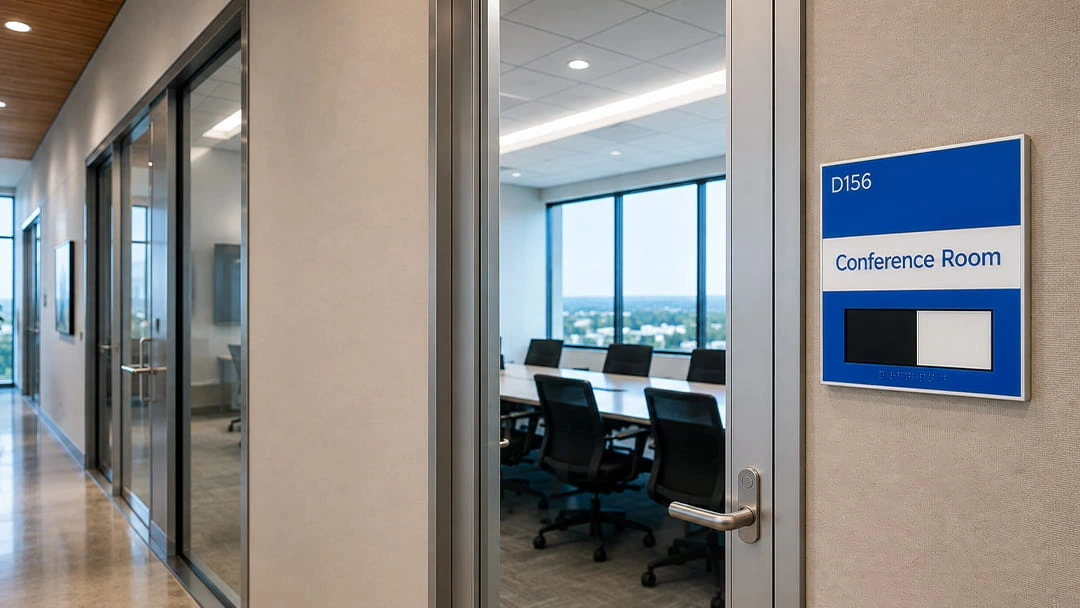
Permanent room identification signs must include tactile lettering and Grade 2 Braille.
For organizations planning a full signage system, ALTIUS Graphics offers custom ADA and Braille signage solutions through its ADA signage services.
1. Tactile Signage Requirements in California
Tactile signs are required for permanent rooms and spaces.
These signs must include:
Raised Characters
California requires:
- Uppercase letters
- Sans-serif fonts
- Raised tactile characters
- Character height between 5/8 inch and 2 inches
Grade 2 Braille
California requires:
- Contracted (Grade 2) Braille
- Rounded or domed Braille dots
- Braille positioned directly below tactile text
These requirements help ensure readability for individuals with visual impairments.
2. California Restroom Sign Requirements (Title 24)
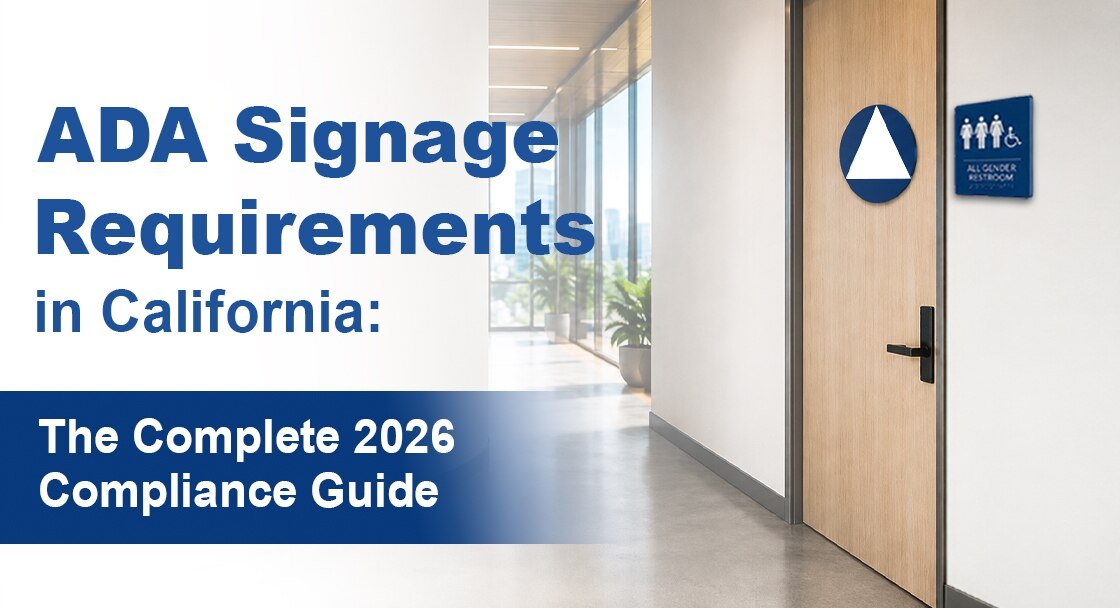
One of the biggest differences between federal ADA requirements and California regulations is the mandatory geometric restroom door symbol.
California requires two separate restroom signs:
Sign #1: Geometric Door Symbol
Installed directly on the restroom door.
Sign #2: Tactile Wall Sign
Installed adjacent to the door with raised text and Braille.
This dual-sign system is unique to California and is one of the most common areas where businesses fail inspections.
Men’s Restroom Sign Requirements
California requires:
- Equilateral triangle
- 12-inch sides
- ¼-inch thickness
Women’s Restroom Sign Requirements
California requires:
- Circle
- 12-inch diameter
- ¼-inch thickness
Unisex / Gender-Neutral Restroom Sign Requirements
California requires:
- Triangle superimposed inside a circle
- Circle must be 12 inches in diameter
- ¼-inch thickness
3. ADA Sign Mounting Height Requirements in California
Proper installation is just as important as sign design.
Many ADA violations occur because signs are installed at incorrect heights.
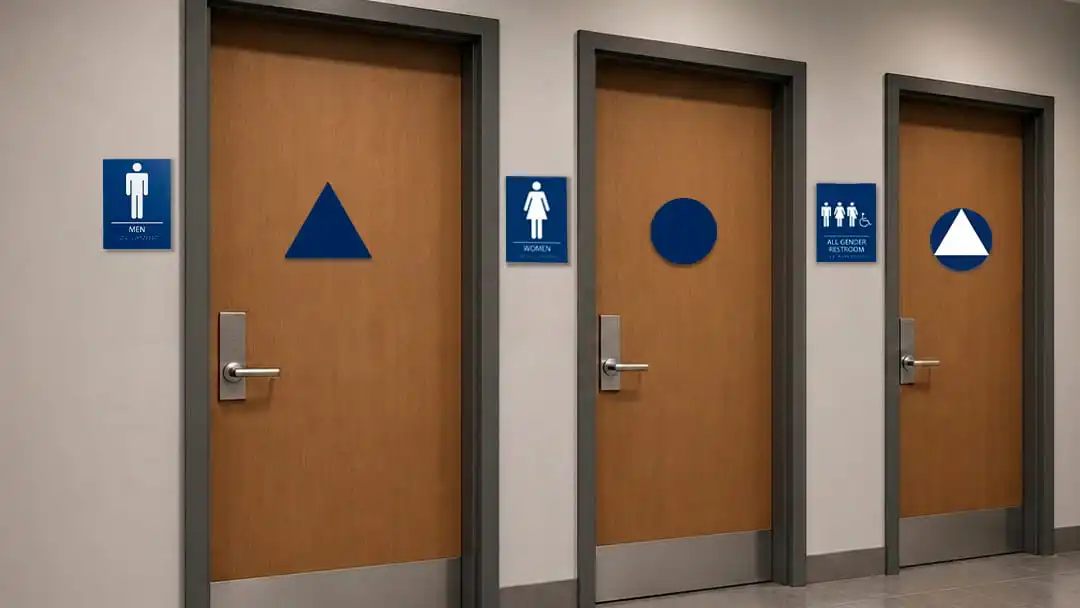
Restroom Door Symbols
Door symbols must:
- Be centered horizontally on the door
- Have centerline mounted between 58 and 60 inches above finished floor
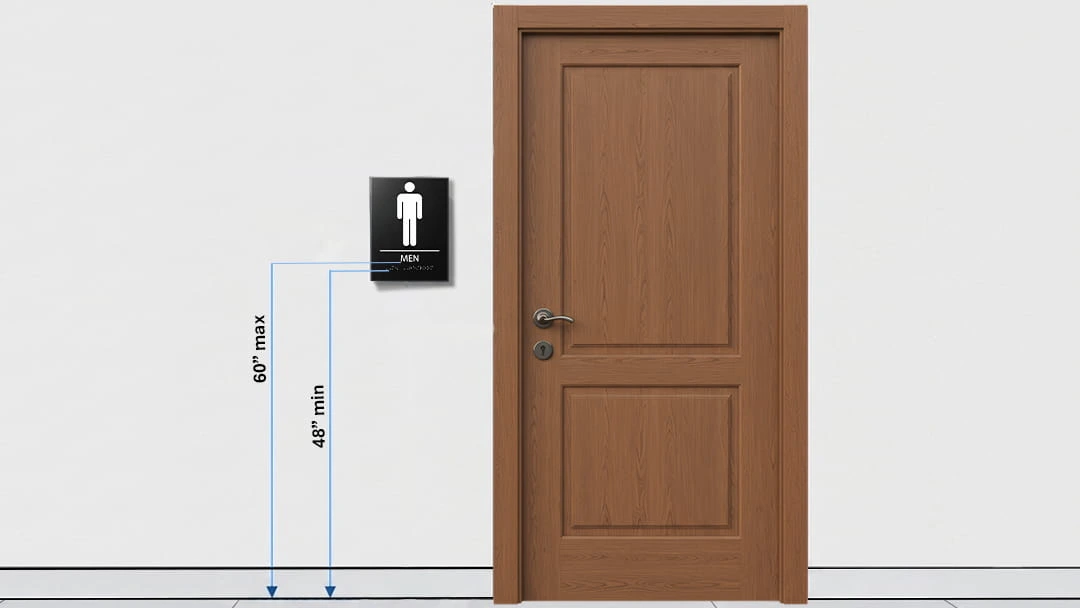
Tactile Wall Signs
Must be:
- Installed on the latch side of the door
- Lowest Braille cell baseline at least 48 inches above floor
- Highest tactile character no more than 60 inches above floor
4. Color Contrast and Non-Glare Finish Requirements
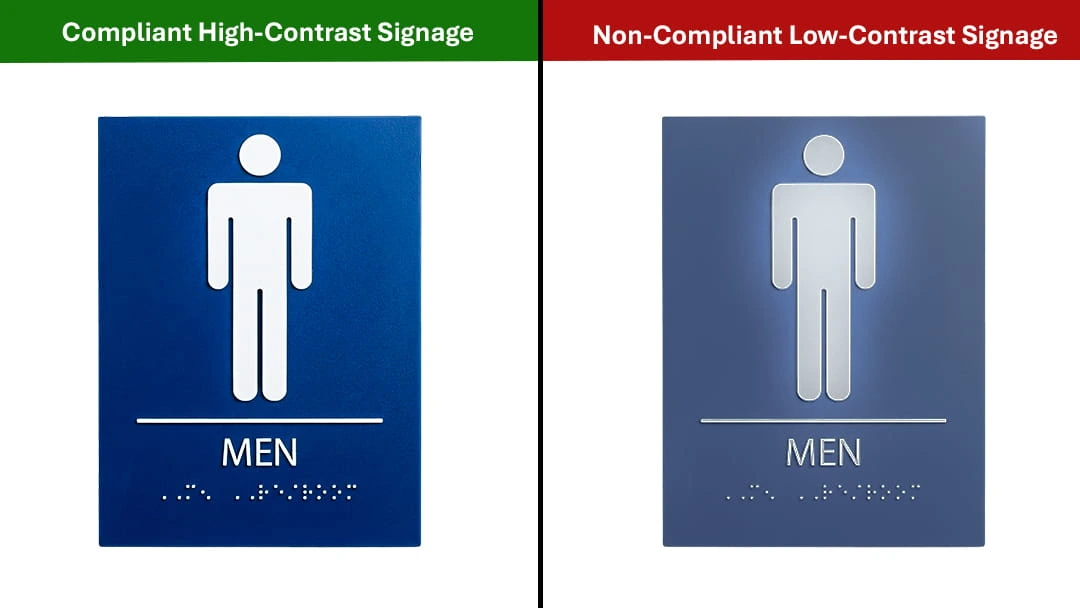
California requires signage to be easily readable for individuals with low vision.
Signs must have:
High Contrast
Examples:
- White text on black background
- Black text on white background
- Light gray text on dark blue background
Non-Glare Finish
Acceptable finishes include:
- Matte
- Satin
- Eggshell
Avoid:
- Glossy acrylic
- Reflective materials
- High-shine metallic surfaces
High contrast and non-glare finishes are among the most frequently cited accessibility requirements.
5. Stairwell and Exit Sign Requirements
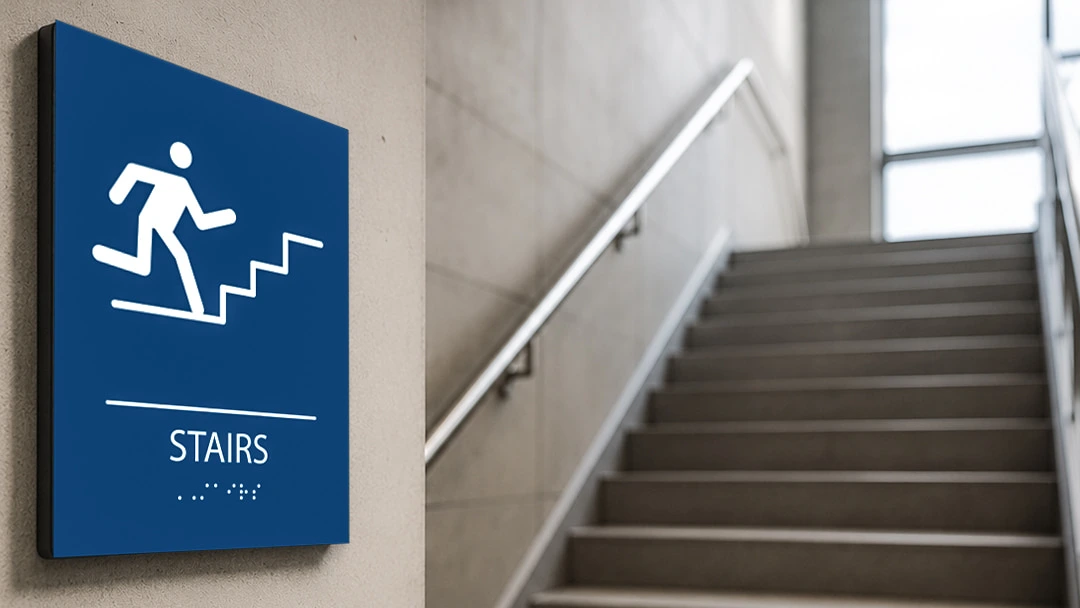
California requires accessibility signage beyond restrooms and room identification.
Exit Signs
| Doors leading directly outside must display: | EXIT |
| Routes leading to final exits must display: | EXIT ROUTE |
Stairwell Signs
Buildings with four or more stories must include:
- Stairwell identification
- Floor level
- Roof access information
- Exit discharge information
6. Common California ADA Signage Violations
Based on industry inspections, the most common compliance issues include:
Missing Braille
Permanent rooms without Grade 2 Braille.
Incorrect Mounting Heights
Signs mounted outside the 48–60 inch tactile reading zone.
Poor Contrast
Characters blend into the background.
Glossy Finishes
Reflective surfaces reduce readability.
Missing Restroom Door Symbols
Failure to install California-required geometric restroom signs.
Improper Braille Placement
Braille is not located directly below tactile text.
These issues can trigger accessibility complaints and costly remediation projects.
ADA Signage Checklist for California Businesses
Before scheduling an inspection, verify that your facility includes:
- Grade 2 Braille
- Raised tactile lettering
- Non-glare finish
- High contrast colors
- Proper mounting heights
- California restroom geometric symbols
- Exit and stairwell identification signs
- Room identification signs for permanent spaces
Why Professional ADA Sign Manufacturing Matters
California accessibility compliance is highly technical.
A small error in:
- Braille spacing
- Mounting location
- Character size
- Symbol dimensions
can result in failed inspections and expensive replacements.
Working with experienced ADA signage manufacturers helps reduce risk while ensuring compliance from design through installation.
Understanding and implementing ADA Signage Requirements in California goes beyond meeting federal ADA standards. California’s Title 24 regulations introduce additional requirements for restroom signage, tactile signs, Braille, mounting heights, and accessibility design.
By following these guidelines, businesses can improve accessibility, pass inspections, reduce legal risk, and create welcoming environments for all visitors.
If you need professionally manufactured ADA-compliant signage, ALTIUS Graphics provides custom ADA signs, Braille signs, room identification signs, and complete interior signage systems designed to meet both federal ADA standards and California Title 24 requirements.
FAQs on ADA Signage Requirements in California
What are the ADA signage requirements in California?
California ADA signage requirements include compliance with both the federal ADA Standards for Accessible Design and California’s Title 24 Building Code. Permanent room signs must feature raised tactile characters, Grade 2 Braille, high-contrast colors, and a non-glare finish. California also requires specific geometric restroom door symbols that are not mandated under federal ADA standards.
What is the difference between ADA signage and California Title 24 signage requirements?
While ADA standards establish nationwide accessibility requirements, California Title 24 adds stricter regulations. One of the most notable differences is the requirement for geometric restroom door symbols, including a triangle for men’s restrooms, a circle for women’s restrooms, and a combined circle-and-triangle symbol for unisex restrooms. California also has specific mounting, Braille, and tactile sign requirements that go beyond federal standards.
What height should ADA signs be mounted in California?
California requires tactile wall signs to be mounted on the latch side of the door whenever possible. The baseline of the lowest Braille cell must be at least 48 inches above the finished floor, while the highest tactile character cannot exceed 60 inches above the floor. Restroom door symbols must be centered horizontally and mounted with their centerline between 58 and 60 inches above the floor.
Does California require Braille on all ADA signs?
No. Braille is required on signs identifying permanent rooms and spaces such as restrooms, offices, conference rooms, classrooms, stairwells, and exits. Temporary signs, directional signs, and informational signs generally do not require Braille. California specifically requires contracted Grade 2 Braille positioned directly below the raised tactile text.
What happens if my business does not comply with California ADA signage requirements?
Non-compliant signage can result in failed inspections, accessibility complaints, costly remediation work, and potential legal action. California businesses may face lawsuits related to accessibility barriers if signage does not meet ADA and Title 24 requirements. Ensuring proper sign design, installation, Braille placement, and restroom identification helps reduce compliance risks and creates a more accessible environment for visitors.
Are California restroom signs required to have geometric symbols?
Yes. California Title 24 requires restroom doors to display raised geometric symbols. Men’s restrooms must have a 12-inch equilateral triangle, women’s restrooms must have a 12-inch diameter circle, and unisex restrooms must feature a triangle superimposed within a circle. These symbols must contrast with the door surface and be mounted at the correct height to comply with state regulations.