
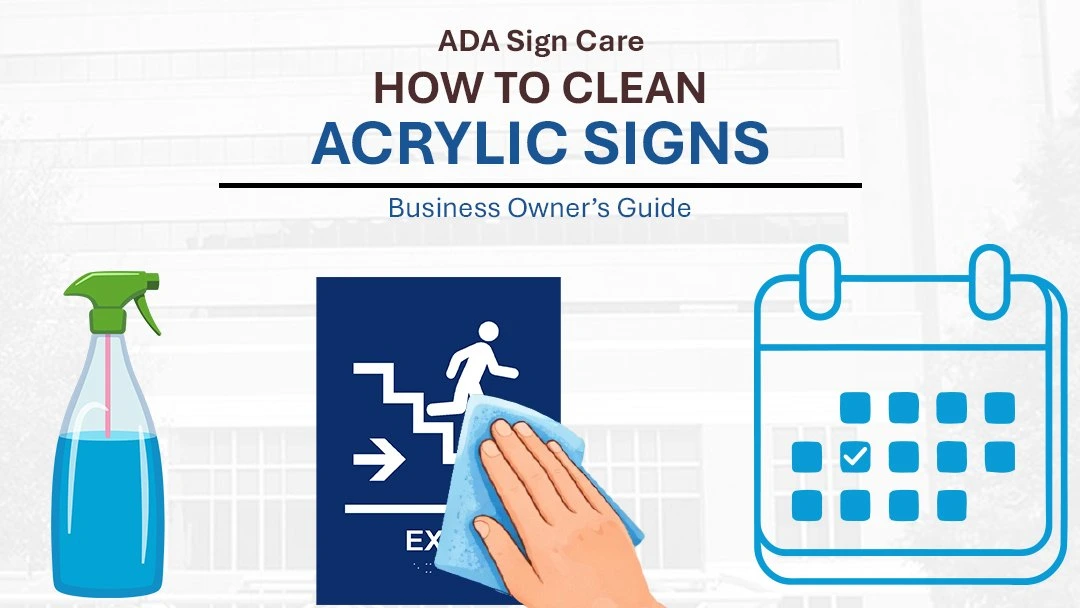
Your ADA Signs Represent Your Business—Keep Them Looking Professional
Table of Contents
Keep your ADA signs clean and compliant with these simple tips and safe cleaning steps.
Top 5 ADA Sign Cleaning Mistakes
- Using harsh or alcohol-based cleaners
- Using rough cloths like paper towels
- Cleaning signs while they are dry
- Skipping regular cleaning and maintenance
- Scrubbing too hard over tactile and Braille areas
Quick Steps to Safely Clean ADA Signs
Follow this proven method for how to clean acrylic signs safely:
- Dust the sign with a soft, dry microfiber cloth.
- Mix mild soap with lukewarm water.
- Wipe the sign gently with a damp microfiber cloth.
- Rinse with a clean, damp cloth to remove residue.
- Blot dry with a soft cloth – do not scrub.
This quick process ensures consistent ADA sign maintenance and extends the lifespan of your signage.
Quick Comparison Table (Wrong Method vs. Correct Method)
| Wrong Method | Correct Method |
|---|---|
| Glass cleaner | Acrylic-safe cleaner |
| Paper towels | Microfiber cloth |
| Dry wiping | Damp cleaning |
| Scrubbing | Gentle wiping |
Every day, customers and employees interact with your ADA signs. Over time, dust, fingerprints, and oils can dull the acrylic surface. Understanding how ADA sign care is essential to maintaining a professional and accessible environment.
For business owners and facility managers, ADA signage is more than a requirement. It reflects professionalism and compliance with the ADA.gov accessibility standards.
Acrylic signs are durable and ideal for high-traffic environments. However, without proper ADA sign maintenance, even premium signage can lose clarity and effectiveness. Signs that looked fine last year now need to be replaced.
This guide covers the five most common mistakes and simple solutions on how to fix them.
Mistake #1: Using Harsh or Alcohol-based Cleaners
Why This Is a Problem
One of the most common errors when learning how to clean acrylic signs is treating them like glass. The damage isn’t always immediate.
Standard cleaners can:
- Cause cloudy or hazy finishes
- Lead to fine cracks (crazing)
- Result in permanent damage
Once damaged, signs often need replacement.
How to Fix It: Use Acrylic-Safe Cleaning Solutions
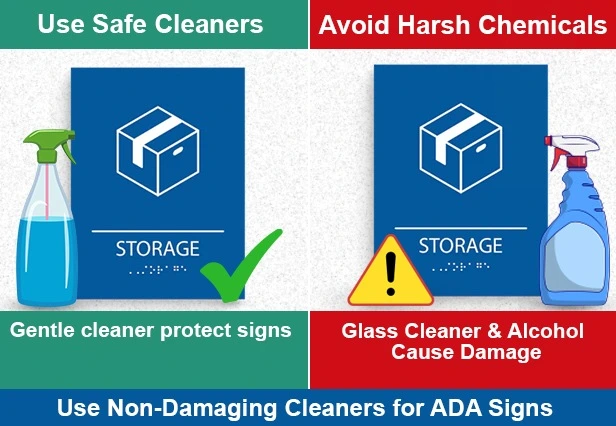
Follow these safe practices for proper ADA sign maintenance:
- Use mild soap with lukewarm water
- Choose cleaners specifically made for acrylic
- Rinse thoroughly with clean water
Avoid:
- Ammonia-based cleaners
- Alcohol-based solutions
- Harsh chemical sprays (Any spray not labeled safe for acrylic)
👉 Refer to safe cleaning practices from the EPA.
Pro Tip: Always test new cleaning products on a small hidden area before applying them to the full sign.
Mistake #2: Using Rough Cloths like Paper Towels
Why This Is a Problem
Acrylic is durable but not scratch-resistant. Using rough materials damages the surface and affects visibility.
This is especially important in tactile signage cleaning, where surface clarity and texture matter.
Paper towels and rough cloths:
- Create micro-scratches
- Make signs appear dull
- Increase dust attraction due to static
How to Fix It: Use Soft Materials
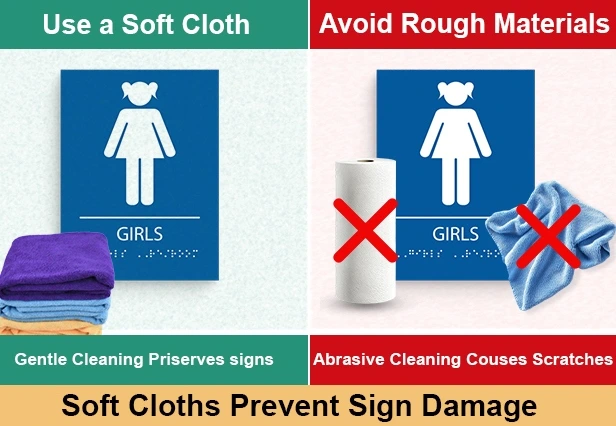
For safe tactile signage cleaning, use:
- Microfiber cloths
- Soft cotton cloths
- Chamois
Avoid:
- Paper towels
- Scrubbing pads
- Dirty cloths
Always apply light pressure and let the cleaner do the work.
👉 Explore our ADA Braille Signs
Mistake #3: Cleaning Signs While They Are Dry
Why This Is a Problem
Dry cleaning is one of the biggest mistakes in how to clean acrylic signs.
Dust particles scratch the surface when wiped without moisture. Even a soft microfiber cloth causes scratches when there’s no moisture to lift the debris first.
How to Fix It: Use a Two-Step Cleaning Method
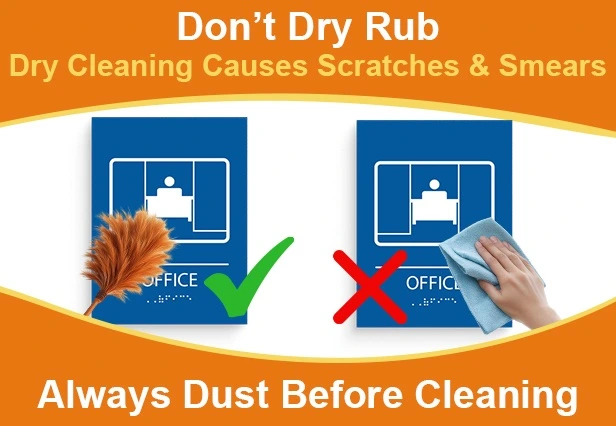
This method supports effective ADA sign maintenance:
- Lightly dampen the surface before wiping.
- Gently wipe with a microfiber cloth
- Blot dry instead of rubbing
This protects the finish and ensures a streak-free result.
Mistake #4: Skipping Regular Cleaning and Maintenance
Why This Is a Problem
A sign that’s never cleaned collects oils, dust, and grime that dull the acrylic and obscure Braille. Ignoring routine ADA sign maintenance reduces readability and affects your brand image. Accessibility isn’t about having the sign. It’s about keeping it functional.
Over time, buildup leads to:
- Reduced visibility
- Poor first impressions
- Accessibility concerns
How Often Should ADA Acrylic Signs Be Cleaned?
Monthly: High-traffic areas (healthcare, retail, restaurants)
Quarterly: Offices and low-traffic areas
As needed: When signs appear dirty
Regular cleaning is also critical for proper Braille sign care, as dirt buildup can reduce tactile readability. It takes five minutes and extends the life of every sign.
👉 ADA standards are guided by the United States Access Board.
Best Practice: Include signage in your regular cleaning schedule.
Mistake #5: Scrubbing Too Hard over Tactile and Braille Areas
Why This Is a Problem
Proper Braille sign care requires extra attention.
ADA signs include raised letters and Braille dots. Excess pressure can:
- Damage tactile elements
- Wear down Braille dots
- Loosen adhesives
The sign may look fine visually while becoming non-compliant to the touch.
How to Fix It: Use Proper ADA-Safe Techniques
For safe tactile signage cleaning:
- Spray cleaner onto the cloth, not directly on the sign
- Wipe gently in one direction
- Avoid scrubbing raised text or Braille
- Allow air drying or blot gently
Light pressure is enough. If you’re pressing hard, something is wrong with the method, not the sign.
👉 Learn more about our hospital ADA signs
Turn Proper Maintenance Into Long-Term Savings
ADA signs are the law. Keeping them clean and readable is part of maintaining compliance. Damaged signs need replacement, and replacement costs more than five minutes of proper cleaning. Maintaining your signage is not just about cleaning—it’s about protecting your investment.
With proper ADA sign maintenance, you can:
- Reduce replacement costs
- Maintain a polished, professional environment
- Ensure compliance
- Extend the lifespan of your signage
Looking to upgrade your signage with durable, easy-to-maintain materials?
Our team at ALTIUS Graphics specializes in high-quality acrylic and ADA-compliant signage designed for long-term performance.
👉 Read More on custom interior ADA signage
👉 Click here to request a quote today
FAQs on ADA Sign Care
What is the best way to clean acrylic signs?
The best way to clean acrylic signs is to use mild soap, lukewarm water, and a microfiber cloth. Avoid ammonia or alcohol-based cleaners and always clean gently.
How often should ADA sign maintenance be performed?
ADA sign maintenance should be performed monthly for high-traffic areas, quarterly for offices, and as needed when signs appear dirty.
What is the safest method for Braille sign care?
Use a soft microfiber cloth, mild cleaning solution, and gentle pressure to avoid damaging tactile elements.
Can tactile signage cleaning damage raised lettering?
Yes. Using excessive pressure or rough materials can damage raised text and Braille. Always clean gently and spray the cloth, not the sign.
Can I use paper towels in a pinch?
No, paper towels leave micro-scratches even when they feel soft. Keep a microfiber cloth with your cleaning supplies.